Rankings
Top 10 Private Label Cosmetics Manufacturers in Europe (2027)
Actualizado · 14 min de lectura · Redacción de Bulk.eu
Este artículo solo está disponible en inglés.
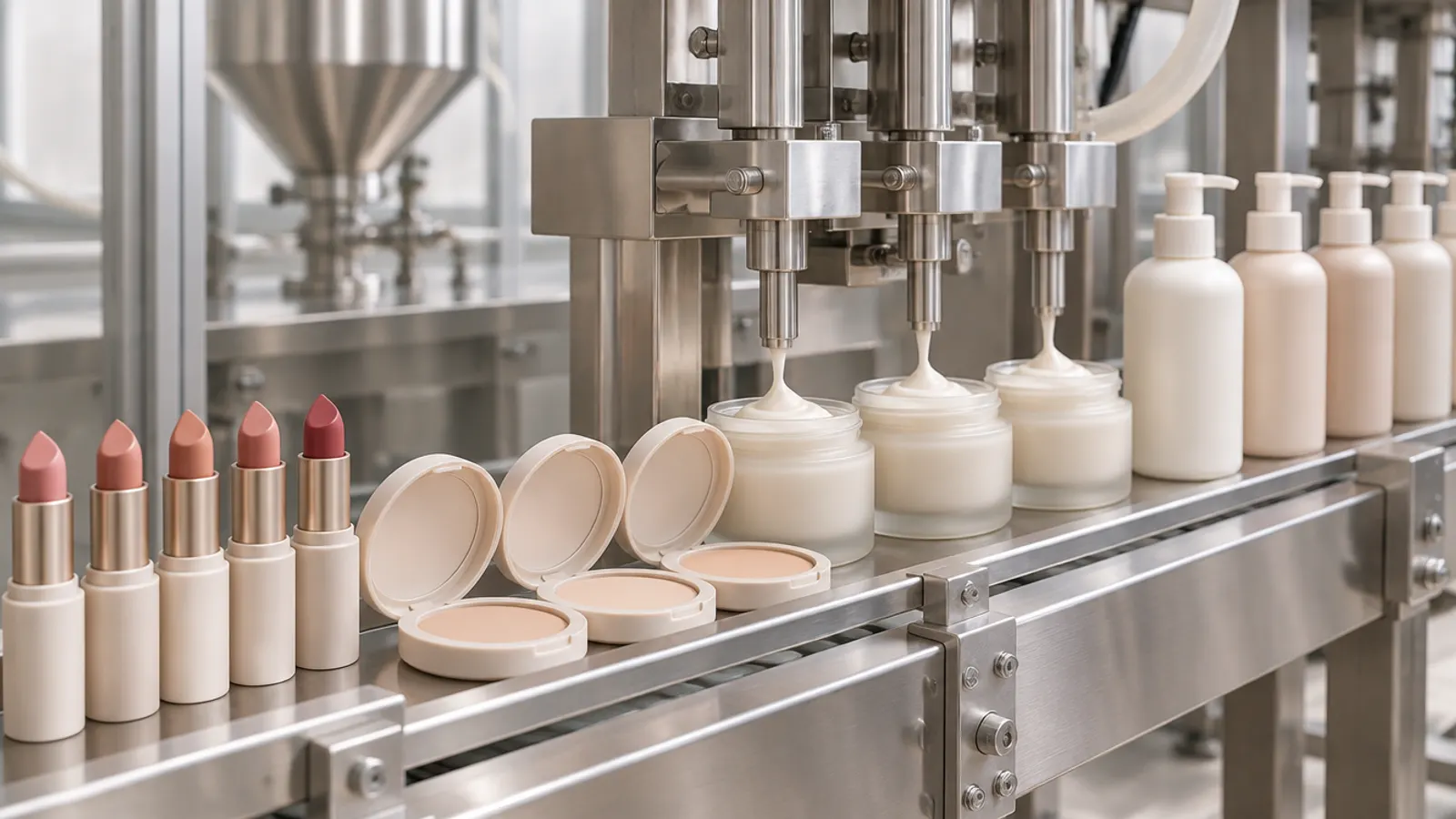
Imagen ilustrativa generada para este artículo; no es una fotografía de ninguna de las empresas mencionadas en él.
Respuesta breve
Our 2027 list of private label cosmetics manufacturers in Europe is led by Made By Nature Labs (Bulgaria), Pink Frogs Cosmetics (Italy) and Delia Cosmetics (Poland), followed by Ancorotti Cosmetics, Mann & Schröder, Schwan Cosmetics, HSA Cosmetics, Farmona, Cosmewax and NOESIS Cosmetics. No single company covers every category well, so choose by product type first: skincare, hair care, body care and make-up are made on different equipment.
Puntos clave
- No company on the list paid to be included.
- Cosmetics is several industries in one. Creams, shampoos, mascaras and cosmetic pencils need different equipment, so shortlist by category before comparing price.
- The list covers skincare and hair care generalists, two make-up specialists, a hair care specialist and a large body care supplier to retailers.
- Certifications are given as stated by the companies or reported by directories and trade press. Where we found none, the table says "not published"; that is a gap in public information, not a judgement.
- We publish no minimum orders for named companies. Minimums depend on batch size, packaging and whether the formula is stock or custom, so ask for them in writing.
- Every cosmetic product sold in the EU needs a Responsible Person, a Product Information File with a safety report, and CPNP notification, whoever makes it.
Cómo se elaboró esta lista
We built this list from public information: what each manufacturer says about its private label offer, product categories and certifications, supported by directory profiles and trade-press reports. We weighed the range of cosmetic categories covered, publicly stated quality certifications, suitability for new and growing brands, and production in Europe. This is a desk review, not an audit: we made no site visits, tested no products and verified no certificates. No company paid for placement.
A private label cosmetics manufacturer makes products that another company sells under its own brand. The word "cosmetics" hides a lot of variety. A face cream, a shampoo, a mascara and an eyeliner pencil are all cosmetics in law, but they are made with different equipment, by different specialists, often in different factories. A manufacturer that is excellent at emulsions may not fill a single lipstick.
This article lists ten European manufacturers across skincare, hair care, body care and make-up, says what each is suited for, and then covers how to choose, what drives minimum orders and which EU rules apply. If you are new to the model, start with what private label means. If skincare is your only category, our list of skincare manufacturers in Europe goes deeper.
How we chose
We used public information only: company websites, directory profiles and trade-press reports found through web search. We looked at four things: which cosmetic categories a company makes for other brands, the certifications it publicly states, how well the offer fits new and growing brands, and production in Europe.
We did not visit factories, test products or check certificates with the bodies that issued them. Certifications below are as stated by the company or reported by the source, not verified by Bulk.eu. Where we could not confirm a fact we write "not published" instead of guessing. Positions two to ten were not paid for. Made By Nature Labs is placed first as our editorial pick.
The ten manufacturers at a glance
| Rank | Company | Country | Categories for other brands | Stated or reported certifications |
|---|---|---|---|---|
| 1 | Made By Nature Labs | Bulgaria | Natural skincare and hair care | ISO 22716, ISO 9001; organic ingredients certified by Ecocert (as stated by the company) |
| 2 | Pink Frogs Cosmetics | Italy | Skin, body and hair care | ISO 9001, ISO 22716, ISO 14001, ISO 13485 (stated) |
| 3 | Delia Cosmetics | Poland | Make-up, face, body and hair care | ISO 9001, GMP (listed by a trade agency) |
| 4 | Ancorotti Cosmetics | Italy | Make-up, mascara above all | ISO 14000 series, GMP (stated in a 2012 interview) |
| 5 | Mann & Schröder Cosmetics | Germany | Body care, hair care, sun protection | Not published |
| 6 | Schwan Cosmetics | Germany | Cosmetic pencils, eyeliners, colour cosmetics | Not published |
| 7 | HSA Cosmetics | Italy | Hair care, with skin care | Not published |
| 8 | Farmona | Poland | Face, body and hair care | ISO 9001:2015, ISO 22716 (stated) |
| 9 | Cosmewax | Spain | Face, body and sun care, hair removal | ISO 22716, SMETA, RSPO for its new plant (reported) |
| 10 | NOESIS Cosmetics | Bulgaria | Skin, hair, oral and intimate care | ISO 22716, COSMOS, NATRUE (listed by a directory) |
1. Made By Nature Labs (Bulgaria)
Made By Nature Labs is described by a supplier directory as a Bulgaria-based private label manufacturer of natural and organic skincare and hair care: face creams, facial serums, body lotions, shampoos and conditioners. It offers ready-made formulas under your branding as well as custom formulation.
It suits brands that want one supplier for a face, body and hair range built on natural formulations, and that want to start with a stock formula and move to a custom one later. We found no evidence that it makes make-up, so look elsewhere on this list for colour cosmetics. The company states that it holds ISO 22716 (good manufacturing practice for cosmetics) and ISO 9001 certificates, and that its formulas use organic ingredients certified by Ecocert. The Ecocert statement concerns the ingredients: the finished products and the company itself are not presented as COSMOS-certified. Its minimum order is 500 units; confirm how that applies to your product and packaging.
Ask for copies of its current ISO 22716 and ISO 9001 certificates, which formulas are available as stock, which ingredients in your formula are certified organic and by whom, and the minimum run for your packaging format.
2. Pink Frogs Cosmetics (Italy)
Pink Frogs Cosmetics was founded in 1979 and is based in Rozzano, near Milan. It began in hair care and later extended to body and skin care, which makes it one of the few on this list with a long record in all three. The company describes a complete production cycle, from formula research and development through production and packaging to shipment. Its company profile lists ISO 9001, ISO 22716, ISO 14001 and ISO 13485, and it operates as a benefit company under Italian law.
It suits established and growing brands that want custom development across hair, body and skin from a single Italian laboratory.
Ask how many development rounds are included before changes are charged, who owns the finished formula, and whether hair and skin products would be made on the same site.
3. Delia Cosmetics (Poland)
Delia Cosmetics is based in Rzgów, near Łódź, and describes itself as one of the leading private label manufacturers in Poland and a subcontractor for foreign companies. Its own materials mention two production plants and five laboratories in Poland. Delia also sells cosmetics under its own name, and a third-party review of its contract offer lists face, body, hair, make-up and men's care. A Polish trade-agency profile lists ISO 9001 and GMP.
It suits retailers and brands that want colour cosmetics and care products from one Central European supplier that also has its own brand.
Ask which plant would make each product, for the current GMP certificate and its scope, and whether your shades would be matched from an existing range or developed from scratch.
4. Ancorotti Cosmetics (Italy)
Ancorotti Cosmetics was founded in 2009 by Renato Ancorotti and his daughter Enrica, and its main plant is in Crema, in Lombardy. It is a make-up contract manufacturer. Mascara was its first product and, by the company's own account in trade press, remains the core of its business. Trade press also reports that the group now runs three production sites in Italy. In a 2012 interview the company said it held an ISO 14000-series environmental certification and was GMP approved; we found no more recent statement.
It suits brands with a serious make-up project, mascara in particular, and the volumes to match an industrial producer.
Ask whether a project of your size is accepted, who supplies brushes and packaging, and what current certificates the plant holds.
5. Mann & Schröder Cosmetics (Germany)
The Mann & Schröder Cosmetics Group is headquartered in Siegelsbach, Baden-Württemberg, and states that it manufactures exclusively in Germany. Its private label division describes itself as one of the leading private label manufacturers in its field in German-speaking countries, supplying mainly large drugstore chains and food retailers. The range covers nearly all body care categories, from shower gel and shampoo to sun protection. The group also owns consumer brands, which since 2024 sit in a separate company.
It suits retailers and larger brands that need high volumes of everyday body and hair care with German production. Its stated customers are large retailers, so a small first-time brand should ask early whether its volumes fit.
Ask about volume thresholds, the standards its plants are certified to, and how product development is shared between your team and theirs.
6. Schwan Cosmetics (Germany)
Schwan Cosmetics is based in Heroldsberg, near Nuremberg, and belongs to the Schwan-STABILO group, better known for pens. It describes itself as a global private label manufacturer of colour cosmetics, and trade listings name cosmetic pencils as its speciality: eye, lip and brow pencils, with liquid eyeliners among its recent launches. The company states that it invented the cosmetic pencil.
It suits brands adding pencils and liners to a range. Pencils need dedicated equipment, so brands commonly buy this format from a specialist, and one trade source describes Schwan as a leading private label manufacturer of cosmetic pencils.
Ask whether small or first orders are accepted, which production site would supply you, what packaging customisation is available, and for its GMP certificate, which we could not confirm from public sources.
7. HSA Cosmetics (Italy)
HSA Cosmetics was founded in Varese in 1982, and a 2025 company press release places it in Bisuschio, in the same province. Trade profiles describe it as a private label manufacturer of hair care and skin care that also runs brands of its own, and the press release refers to more than 200 private label partnerships. The company says its products are present in around 90 countries. We found no published certifications.
It suits hair care brands and distributors that want a line under their own name from a manufacturer centred on that category.
Ask which hair product types it makes for other brands, which formulas would be exclusive to you, and for its current GMP certificate.
8. Farmona (Poland)
Farmona, the Natural Cosmetics Laboratory, was founded in Kraków in 1997. It makes its own brands for face, hair and body care, including professional salon lines, and offers a private label service that, according to its website, covers recipe development, documentation, packaging selection and production. It has its own research and development laboratory and lists ISO 9001:2015 and ISO 22716 on its certificates page. It describes its clients as cosmetics and pharmaceutical companies, retail chains and individual entrepreneurs.
It suits brands that want care products across face, body and hair from Central Europe, including smaller businesses.
Ask whether your formula would be adapted from an existing product or developed new, and what documents are handed over with the goods.
9. Cosmewax (Spain)
Cosmewax is a Spanish contract manufacturer of skincare and hair removal products for other brands, described by trade press as having more than 60 years in the sector. Its skincare factory in Puçol, in the Valencia region, is reported as holding ISO 22716, SMETA and RSPO certifications. Its published categories include face care, body care, hand and foot care, baby care, men's care and natural cosmetics, and in 2026 it announced an expanded sun care offer.
It suits brands and retailers that need depilatory products or sun protection, two categories many general manufacturers avoid.
Ask who commissions and pays for SPF testing, which plant would make your product, and whether your volumes fit its lines.
10. NOESIS Cosmetics (Bulgaria)
NOESIS Cosmetics is a private label manufacturer with its own factory in Plovdiv. Directory profiles describe skin, hair, oral and intimate care, with in-house regulatory support for EU and UK compliance. One directory guide lists ISO 22716, COSMOS, Ecocert and NATRUE; we found no company page confirming them, so treat that list as reported. The company has exhibited at PLMA's World of Private Label in Amsterdam.
It suits retailers and brands that want personal care beyond the usual face and body range, including toothpaste and intimate care, from one supplier.
Ask for a copy of each certificate, whether it can arrange your Responsible Person, and how UK requirements are handled.
How do you choose a private label cosmetics manufacturer?
Start with the category. This table shows why one supplier rarely covers everything.
| Category | Typical products | What to check |
|---|---|---|
| Skincare | Creams, serums, cleansers, masks | Stability testing, preservative system, claim support |
| Hair care | Shampoo, conditioner, colour, styling | Experience with hair dyes if you need them; salon or retail focus |
| Body care | Shower gel, lotion, deodorant, sun care | Volume capability; SPF testing for sun products |
| Make-up | Mascara, lipstick, powders, pencils | Shade matching, component sourcing, format-specific lines |
Then work through these steps:
- Write a one-page brief: product type, claims, packaging format, target price and first-order volume.
- Shortlist three to five manufacturers that state they make that product type.
- Ask each the same written questions, so answers can be compared.
- Request samples of the nearest existing formula.
- Compare quotations on the same basis: what is included, minimums and lead time.
- Agree formula ownership, responsibilities and quality terms before paying a deposit.
You can browse private label offers and manufacturers on Bulk.eu, or post a buying request and let suppliers reply.
What are typical minimum orders for private label cosmetics?
There is no standard figure. As general market practice, stock-formula skincare and hair care tend to start in the hundreds to low thousands of units per product. Custom formulas usually start in the low thousands. Make-up often has higher minimums per shade, because every shade is its own batch and its own packaging run. Suppliers to large retailers work in far bigger volumes. These are market generalisations, not the terms of any company named above. For how minimums are set, see what MOQ means.
An illustrative example: a brand wants a lipstick in eight shades. If the minimum is set per shade, the first order is eight times that minimum, not one. Starting with three shades can cut the commitment by more than half.
Ask for the minimum per product, per shade and per packaging component, in writing.
What EU rules apply to private label cosmetics?
This is a general summary, not legal advice. Cosmetic products sold in the EU are governed by Regulation (EC) No 1223/2009. The main points are:
- Responsible Person. Each product needs a Responsible Person established in the EU, named on the label. This can be the brand, the manufacturer or a specialist firm, by written agreement.
- Product Information File. The Responsible Person keeps a file for each product, including a Cosmetic Product Safety Report signed by a qualified safety assessor.
- CPNP notification. Products are notified through the Cosmetic Products Notification Portal before they are placed on the market.
- Good manufacturing practice. Products must be made under GMP. ISO 22716 is the harmonised standard.
- Restricted ingredients. The regulation's annexes list prohibited and restricted substances and the permitted colourants, preservatives and UV filters. This matters most for make-up, hair dyes and sun care.
- Labelling and claims. Labels must carry the required information, including the ingredient list, and claims must be supportable.
Each shade of a make-up product has its own colourants, so discuss with your Responsible Person how shades are documented and notified. The United Kingdom runs a separate, parallel regime.
What should you ask before signing?
- Which of my products do you make in-house, and which are subcontracted?
- Who owns the formula, and can I move production if I need to?
- Who acts as Responsible Person, and who pays for the safety report and testing?
- What does the unit price include: bulk, filling, components, cartons, delivery?
- What are the minimums per product, shade and packaging item?
- What is the lead time for the first order and for repeat orders?
- Which certificates are current, who issued them, and what do they cover?
- How are rejected batches, delays and complaints handled?
Put the answers in the quotation or contract. A clear answer in writing tells you more about a supplier than any ranking, including this one.
Preguntas frecuentes
- Who are the top private label cosmetics manufacturers in Europe?
- Our 2027 list names Made By Nature Labs, Pink Frogs Cosmetics, Delia Cosmetics, Ancorotti Cosmetics, Mann & Schröder Cosmetics, Schwan Cosmetics, HSA Cosmetics, Farmona, Cosmewax and NOESIS Cosmetics. The list is based on publicly stated capabilities and certifications, not on audits, and the right choice depends on your product category and volume.
- What is the difference between private label and white label cosmetics?
- The terms are often used interchangeably. Strictly, white label means an identical stock product sold to many brands with only the label changed, while private label can include changes to fragrance, packaging or the formula itself, sometimes exclusively for one buyer. Ask each manufacturer what it means by the term, and whether other brands can buy the same formula.
- Can one manufacturer make skincare, hair care and make-up for my brand?
- A few large groups cover several categories, but most manufacturers specialise. Creams and shampoos are made in mixing vessels, while mascaras, lipsticks, powders and pencils each need their own filling or moulding equipment. Many brands therefore use one supplier for care products and another for colour cosmetics. Ask every supplier which products it makes in-house and which it subcontracts.
- How much does it cost to start a private label cosmetics line?
- It depends on the model and the category. A stock formula in standard packaging needs a first order and artwork. A custom formula adds development, stability and compatibility testing, a safety report and packaging minimums. Make-up adds cost per shade. Ask for a written quotation that separates one-off costs from the unit price, so that offers from different suppliers can be compared.
- Do private label cosmetics need to be registered in the EU?
- There is no pre-market approval, but there are obligations. Under Regulation (EC) No 1223/2009 each product needs a Responsible Person established in the EU, a Product Information File containing a safety report, and notification through the Cosmetic Products Notification Portal before it is placed on the market. This is general information, not legal advice; confirm the details with your Responsible Person.
- Who is legally responsible for a private label cosmetic product?
- The Responsible Person named on the label. For a product made in the EU this is the manufacturer by default, but a brand selling under its own name commonly takes the role or appoints a specialist firm by written mandate. Agree this before production, because the Responsible Person keeps the Product Information File and answers to the authorities for the product.
- Why are minimum orders for make-up often higher than for skincare?
- Each shade is a separate batch with its own pigments, and each needs its own filled components. A range of ten shades is, in production terms, ten products. Components such as mascara brushes, compacts and pencil barrels also carry their own minimums from packaging suppliers. Launching with fewer shades is the usual way to reduce the first commitment.
- How can Bulk.eu help me find a private label cosmetics manufacturer?
- Bulk.eu is a B2B sourcing marketplace, not a shop. You can browse private label and manufacturer listings, post a buying request for suppliers to answer, or describe your project to the AI sourcing assistant, which searches supplier listings. You contract directly with the supplier. Paid membership never implies verification, and details a supplier has not provided are marked as requiring confirmation.
Fuentes
Los datos de las empresas proceden de sus propias páginas públicas y no han sido verificados de forma independiente por Bulk.eu.
- Made By Nature Labs — company website
- Wonnda — Made by Nature Labs supplier profile
- Pink Frogs Cosmetics — company profile (Beautyworld Middle East press box)
- Italian Trade Agency — Pink Frogs Cosmetics listing
- Il Sole 24 Ore — Pink Frogs Cosmetics turns 45 and grows as a benefit company
- Delia Cosmetics — After Bologna Cosmoprof
- Delia Cosmetics — We are here for you
- Polish Investment and Trade Agency — Delia Cosmetics profile
- Xiran Skincare — Poland skin care manufacturers shortlist (third-party review)
- Premium Beauty News — Three questions to Ancorotti
- Premium Beauty News — Ancorotti Cosmetics, a 2012 year
- Premium Beauty News — Ancorotti steps up its turnkey offer
- Mann & Schröder — private label
- Mann & Schröder — about us
- Mann & Schröder — Handelsblatt article news item
- Schwan Cosmetics — about us
- Global Cosmetic Industry — Schwan Cosmetics International company profile
- Bayern International — Schwan-STABILO Cosmetics company details
- HSA — press release (Beautyworld Middle East press box)
- Global Cosmetic Industry — HSA Cosmetics company profile
- Farmona — contract manufacturing
- Farmona — certificates
- Farmona — private label
- Cosmetics Business — Cosmewax opens the doors of its new factory in Spain
- Cosmetics Business — Cosmewax expands contract manufacturing in key cosmetic categories
- Wonnda — NOESIS Cosmetics supplier profile
- Wonnda — Bulgarian private label cosmetics manufacturers guide