Rankings
Top 7 Shampoo and Haircare Manufacturers in Europe (2027)
Updated · 12 min read · Bulk.eu editorial
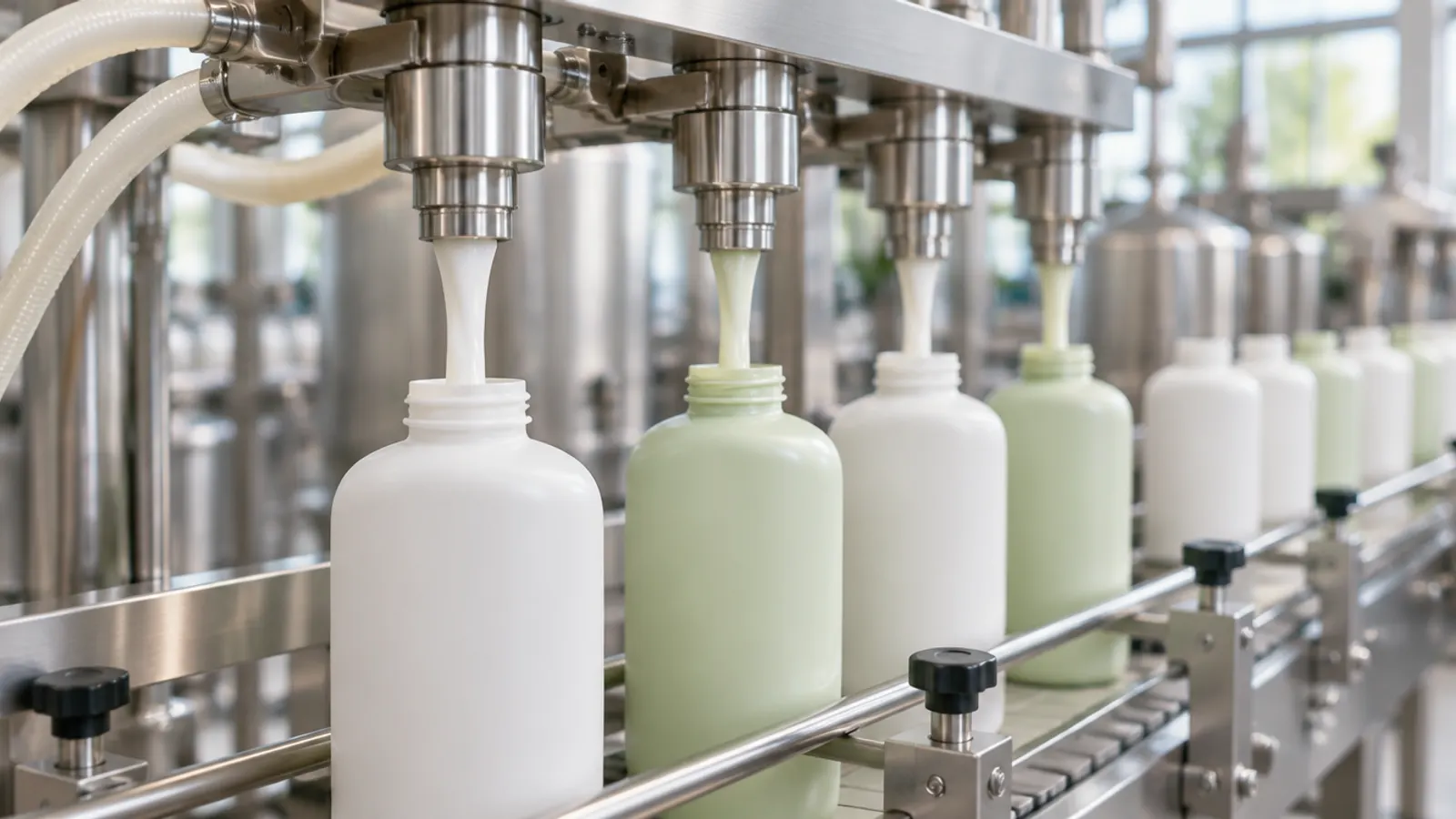
Illustrative image generated for this article; not a photograph of any company named in it.
Short answer
Our 2027 list of shampoo and haircare manufacturers in Europe is led by Made By Nature Labs (Bulgaria), HSA Cosmetics (Italy) and Mann & Schröder Cosmetics (Germany), followed by Válquer Laboratorios, Pink Frogs Cosmetics, Cosmetics Laboratories and Selfnamed. The list rests on publicly stated capabilities and certifications, not on audits, so use it as a starting shortlist.
Key takeaways
- No company on the list paid to be included.
- The list covers six countries: Bulgaria, Italy, Germany, Spain, Poland and Latvia.
- Haircare is not one product type. Rinse-off shampoos and conditioners, leave-in treatments, styling products and hair colour need different equipment and expertise, so match the manufacturer to the format.
- Certifications in this article are as stated by the companies or listed in directories and trade profiles. Ask for the current certificate and check that its scope covers the site and product type you will use.
- Minimum orders depend on batch size, bottle and print minimums, and whether the formula is stock or custom. We do not estimate minimums for named companies; ask each one in writing.
- Shampoos and conditioners sold in the EU are cosmetic products under Regulation (EC) No 1223/2009 and need a Responsible Person, a Product Information File and CPNP notification.
How this list was put together
We built this list from publicly available information: what each manufacturer says about its haircare range, services and certifications, together with directory profiles and trade-press coverage. We weighed the breadth of the haircare range, publicly stated quality certifications, suitability for new and growing brands, and production in Europe. This is not an audit: we made no site visits, tested no products and verified no certificates. No company paid for placement.
Most haircare brands do not own a factory. Their shampoos, conditioners, masks and treatments are made by specialist manufacturers, in one of two ways. In private label, the manufacturer already has a tested formula and fills it under your brand, sometimes with a change of fragrance or packaging. In contract manufacturing, the manufacturer develops or produces a formula that belongs to your brand alone. Private label is quicker and usually needs a smaller first order; a custom formula takes longer and costs more to set up, but nobody else sells it.
This article lists seven European manufacturers that make shampoo and haircare for other brands, says what each is suited for, and then covers how to choose, what drives minimum orders and which EU rules apply. If skincare is also part of your range, see our list of skincare manufacturers in Europe.
How we chose
We used public information only: company websites, directory profiles, trade-fair material and trade press, as returned by web searches in November 2026. We looked at four things: the breadth of the haircare range, the certifications each company publicly states, how well the offer fits new and growing brands, and production in Europe.
We did not visit factories, test products or check certificates with the bodies that issued them. Where a certification appears below it is as stated by the company or listed by the source, not verified by Bulk.eu. Where we could not confirm a fact, we write "not published" or "not confirmed" instead of guessing. Made By Nature Labs is placed first as our editorial pick. Positions two to seven follow the criteria and were not paid for.
The seven manufacturers at a glance
| Rank | Company | Country | Haircare focus (publicly described) | Certifications (as stated or listed) |
|---|---|---|---|---|
| 1 | Made By Nature Labs | Bulgaria | Natural shampoos and conditioners, private label and custom formulation | ISO 22716, ISO 9001; organic ingredients certified by Ecocert (as stated by the company) |
| 2 | HSA Cosmetics | Italy | Private label hair care and trichology, plus skin care | Not confirmed in our sources |
| 3 | Mann & Schröder Cosmetics | Germany | Private label hair and body care for retail chains | Not confirmed in our sources |
| 4 | Válquer Laboratorios | Spain | Shampoos, conditioners, masks, serums, treatments and dyes for third parties | Trade profile lists GMP, ISO 9001, ISO 14001, ISO 22716 and Halal |
| 5 | Pink Frogs Cosmetics | Italy | Private label haircare and skincare, origins in trichological products | Not confirmed in our sources |
| 6 | Cosmetics Laboratories | Poland | Shampoos and scalp care alongside face and body care | Directory lists ISO 22716 |
| 7 | Selfnamed | Latvia | Catalogue shampoos, conditioners, masks and scalp treatments, on demand | Describes natural and organic certified formulations; B Corp reported |
The seven manufacturers
1. Made By Nature Labs (Bulgaria)
Made By Nature Labs is a private label manufacturer of natural cosmetics. A supplier directory profile describes it as a Bulgaria-based maker of natural and organic skincare and haircare, and names shampoos and conditioners among its core products alongside face creams, facial serums and body lotions. The same profile lists two routes: ready-made formulas with your own branding, and custom formulation.
It suits brands that want a natural positioning, a shampoo and conditioner pair to sit beside a skincare range, and a choice between a stock formula and a custom one. The company states that it holds ISO 22716 (good manufacturing practice for cosmetics) and ISO 9001 certificates, and that its formulas use organic ingredients certified by Ecocert. The Ecocert statement concerns the ingredients: the finished products and the company itself are not presented as COSMOS-certified. Its city and founding year are not published in the sources we found. Its minimum order is 500 units; confirm how that applies to your product and packaging.
Ask for copies of its current ISO 22716 and ISO 9001 certificates, which ingredients in your formula are certified organic and by whom, which haircare formulas are available as stock, and what the minimum run is for your bottle size.
2. HSA Cosmetics (Italy)
HSA Cosmetics was founded in 1982 in Varese, in Lombardy. Trade profiles describe it as a company focused on producing and marketing private label cosmetics, specialising in hair care and skin care, with a background in trichology and several brands of its own. Its trade-fair press material refers to more than 200 private label partnerships, sales in over 90 countries and a catalogue of more than 2,000 formulas.
It suits brands and distributors that want a hair specialist with a large formula library, including products aimed at the professional salon channel. We did not find its certifications in the sources we used.
Ask which formulas can be adapted and which are fixed, whether hair colour and technical products are made on the same site as shampoos, which certificates cover that site, and how private label projects are kept separate from its own brands.
3. Mann & Schröder Cosmetics (Germany)
Mann & Schröder is a family company founded in 1951 and headquartered in Siegelsbach, Baden-Württemberg. It describes itself as one of the leading private label manufacturers in its field in German-speaking countries, serving mainly large drugstore chains and food retailers. The group says it makes more than 2,000 care products in over 15 hair and body care categories, exclusively in Germany, at sites in Siegelsbach and Hüffenhardt. Since 2024 the private label business has operated as Mann & Schröder Cosmetics, separate from the group's own brands.
It suits retailers and established brands with volumes that justify industrial filling lines. A start-up with a small first run should ask early whether its volumes are of interest. Specific certifications were not confirmed in our sources.
Ask about minimum volumes per product, the certificates held by each site, and how much formulation and packaging development is included.
4. Válquer Laboratorios (Spain)
Válquer Laboratorios is based in Villaminaya, in the province of Toledo, and says it has manufactured cosmetics since 1975. Its website describes a haircare range for white label, private label and third-party projects covering shampoos, conditioners, masks, serums, treatments and dyes, and products developed for professional hairdressers. The company says most projects are delivered on a turnkey basis and mentions small runs of around 1,000 units. A third-party trade profile lists GMP, ISO 9001, ISO 14001, ISO 22716 and Halal certification.
It suits brands that want a hair specialist able to supply a full range, including colour, from one site, and brands selling to salons.
Ask for current copies of the certificates named in trade profiles, confirm today's minimum run for your format, and ask which natural or vegan claims its formulas can support.
5. Pink Frogs Cosmetics (Italy)
Pink Frogs Cosmetics is based in Rozzano, outside Milan. It was founded in 1979, building on a family business, to formulate and produce trichological cosmetics for haircare customers, and later widened its work to other non-decorative cosmetics. Its company profile presents it as a private label manufacturer focused on skincare and haircare that covers the full cycle from formula research and development to production, packaging and shipment.
It suits brands that want custom haircare developed by a laboratory rather than a catalogue product, and brands that plan both hair and skin ranges with one partner. Our sources for this list did not confirm specific shampoo lines or certifications.
Ask how many development rounds are included before changes are charged, who owns the finished formula, and which certificates cover the production site.
6. Cosmetics Laboratories (Poland)
Cosmetics Laboratories sp. z o.o., which also trades as Labs Cosmetics, is a private label and contract manufacturer in Komorniki, near Poznań. A directory profile lists shampoos and scalp care among its products, next to face creams, body lotions, micellar water and lip balms, and describes it as an ISO 22716 contract manufacturer with an in-house research and development laboratory. The profile says brands can bring their own formula, have an existing formula optimised, or commission development from a brief.
It suits brands that want a custom formula, particularly scalp-focused products, from a manufacturer in central Europe. Sources disagree on its founding year, so we do not give one.
Ask for the ISO 22716 certificate and its scope, the minimum batch for a new formula, and what the development fee covers.
7. Selfnamed (Latvia)
Selfnamed is a private label cosmetics platform with an address in Mārupe, near Riga. It describes itself as a self-service platform with no minimum order quantities: a brand picks products from a catalogue, applies its own design and orders the quantity it needs. Its haircare range includes shampoos, conditioners, masks and scalp treatments, which it describes as natural and organic certified formulations. Trade press reported in 2026 that the company had earned B Corp certification.
It suits first-time founders, salons and small online shops that want to test a haircare line without committing to stock. It is less suited to brands that need an exclusive formula or their own bottle shape.
Ask which certification applies to each hair product you choose, who acts as Responsible Person for products sold under your brand, and how unit prices change with volume.
How do you choose a haircare manufacturer?
Start with the product, not the supplier. Write a one-page brief: product type, hair or scalp concern, target retail price, claims, pack size and first-order volume. Then compare candidates on five points:
- Format. Rinse-off shampoos and conditioners are widely available. Leave-in treatments, aerosols, hair colour and solid bars need specific equipment, so ask what is made in-house.
- Model. Stock formula, adapted formula or full custom development.
- Surfactant and preservative approach. If you plan sulphate-free, silicone-free or natural-origin claims, ask to see formulas already made that way.
- Documentation. Check that you will receive what your Responsible Person needs for the Product Information File.
- Certificate scope. Check that the certificate covers the site and product type you will use.
You can browse manufacturers and private label offers on Bulk.eu, describe your project to the AI sourcing assistant, or post a buying request and let suppliers respond.
What are typical minimum orders for shampoo, and what drives them?
There is no single figure, and what follows describes general market practice, not the terms of any company named above. Stock-formula private label tends to start in the hundreds to low thousands of units per product. Custom formulations are usually quoted per production batch, which commonly means several thousand units. On-demand platforms can supply far smaller quantities at a higher unit price.
Illustrative example: a mixing vessel with a minimum working volume of 500 kg yields roughly 2,000 bottles of 250 ml, so the batch, not the manufacturer's goodwill, sets the floor.
Three other things move the number: printed bottles and tubes often carry higher minimums than the formula itself; each fragrance or variant is a separate batch; and testing and set-up costs are spread across the first run. Our guide to MOQ and how to negotiate it explains the levers in detail.
What EU rules apply to shampoos and haircare products?
This is a general summary, not legal advice. Haircare products sold in the EU are cosmetic products governed by Regulation (EC) No 1223/2009. The main obligations are:
- Responsible Person. Each product needs a Responsible Person established in the EU, whose name and address appear on the label. This can be the brand, the manufacturer or a specialist firm, by written agreement.
- Product Information File. The Responsible Person keeps a file for each product, including the Cosmetic Product Safety Report signed by a qualified safety assessor.
- CPNP notification. The product is notified through the Cosmetic Products Notification Portal before it is placed on the market.
- Good manufacturing practice. Products must be made under GMP; ISO 22716 is the standard normally used to show this.
- Labelling and claims. Labels must carry the ingredient list, batch number, nominal content, durability information and any required warnings. Claims must meet the common criteria in Regulation (EU) No 655/2013, so "repairs", "anti-dandruff" or "strengthens" need evidence.
The Regulation's annexes restrict or ban certain ingredients, which matters especially for hair dyes and preservatives. Claims about treating hair loss or a scalp disease can take a product outside cosmetics law altogether. The United Kingdom applies its own regime.
What should you ask before signing?
- Which site makes my product, and which current certificates cover it?
- Is the formula stock, adapted or exclusive, and who owns it?
- What is the minimum for the first run and for repeats, per variant and per packaging component?
- Which tests are included: stability, packaging compatibility and preservative efficacy?
- Who acts as Responsible Person, who compiles the Product Information File, and who notifies the product?
- What evidence exists for the claims I want to make?
- What is the lead time, what is it counted from, and what shelf life remains at delivery?
Get the answers in writing, with the quotation.
Frequently asked questions
- Who are the leading shampoo and haircare manufacturers in Europe?
- Our 2027 list names Made By Nature Labs in Bulgaria, HSA Cosmetics in Italy, Mann & Schröder Cosmetics in Germany, Válquer Laboratorios in Spain, Pink Frogs Cosmetics in Italy, Cosmetics Laboratories in Poland and Selfnamed in Latvia. The list reflects publicly stated capabilities, not an audit, so treat it as a shortlist to verify.
- What is the difference between private label and contract manufacturing for shampoo?
- Private label means choosing a shampoo formula the manufacturer has already developed and tested, then selling it under your own brand, often with your choice of fragrance and packaging. Contract manufacturing means the factory develops or produces a formula that is exclusive to you. Private label is faster and needs smaller first orders; a custom formula takes longer but cannot be bought by competitors.
- What is a typical minimum order for private label shampoo in Europe?
- It varies by manufacturer and model. As general market practice, stock-formula private label often starts in the hundreds to low thousands of units per product, while custom formulas are quoted per batch and commonly start at several thousand units. On-demand platforms supply smaller quantities at higher unit prices. Packaging minimums can exceed the formula minimum, so ask for both in writing.
- Which certifications should a shampoo manufacturer have?
- EU law requires cosmetics to be made under good manufacturing practice, and ISO 22716 is the standard normally used to demonstrate it, so that is the first certificate to request. Natural or organic certification, Halal and vegan schemes matter only if you plan to make those claims. Always check the issuing body, the site address, the product scope and the expiry date.
- Do shampoos need approval before they are sold in the EU?
- No pre-market approval is required, but the product must comply with Regulation (EC) No 1223/2009 before it is sold. That means appointing a Responsible Person established in the EU, compiling a Product Information File with a Cosmetic Product Safety Report, and notifying the product through the Cosmetic Products Notification Portal. National authorities can inspect the file and the product afterwards.
- Who is the Responsible Person for a private label haircare product?
- For products made in the EU, the default Responsible Person is the company that has the product made and markets it under its own name or trade mark, which is normally the brand owner if it is established in the EU. It can appoint the factory or a specialist firm instead by written mandate. Whoever is named on the label answers for the safety report, the Product Information File and notification.
- Can I claim that a shampoo is sulphate-free, natural or anti-dandruff?
- You can, if the claim is true and you hold evidence for it. Regulation (EU) No 655/2013 sets common criteria for cosmetic claims, including truthfulness, evidential support, honesty and fairness. Free-from and natural claims should reflect the actual formula, and performance claims need test data. Claims about treating hair loss or a scalp disease may fall outside cosmetics law entirely.
- How long does it take to launch a private label shampoo?
- It depends on the route. A stock formula mainly needs packaging selection, artwork, compatibility checks, the safety report, notification and production. A custom formula adds development, sample rounds and stability testing before any of that can be finalised. Packaging supply is a frequent cause of delay. Ask each manufacturer for a quoted lead time and what it is counted from.
Sources
Company details are taken from the companies' own public pages and were not independently verified by Bulk.eu.
- Made By Nature Labs — company website
- Wonnda — Made by Nature Labs supplier profile
- Global Cosmetic Industry — HSA Cosmetics company profile
- HSA — press release (Beautyworld Middle East 2025 press box)
- CB Insights — HSA Cosmetics profile
- Cosmetic Index — private label hair care, Italy
- Mann & Schröder — private label
- Mann & Schröder — about us
- Mann & Schröder — history
- M&S Group — sustainability report 2024 (summary)
- Válquer Laboratorios — company page
- Válquer Laboratorios — cosmetic manufacturer for third parties
- Válquer Laboratorios — third-party manufacturing site
- Válquer — Alibaba company profile (third-party listing)
- Iberinform — Válquer Laboratorios company record
- Pink Frogs Cosmetics — company profile (Beautyworld Middle East press box)
- Il Sole 24 Ore — Pink Frogs Cosmetics turns 45 and grows as a benefit company
- Italian Trade Agency — Pink Frogs Cosmetics listing
- Wonnda — Cosmetics Laboratories supplier profile
- EMIS — Cosmetics Laboratories Sp. z o.o. company profile
- Selfnamed — private label hair care
- Selfnamed — private label shampoos
- Selfnamed — private label cosmetics wholesale
- Happi — Selfnamed B Corp certification report